Back to All Blogs
November 28, 2025


The future of technology is being rewritten. While artificial intelligence is already part of most of our digital lives, over the next decade, it will become central to how we work, build, sell, collaborate, and live. This shift is changing the foundation of how the world operates.
Here’s what lies ahead, and why it matters to you.
Platforms Will Matter More Than Apps
We are entering a world where AI can generate an app in minutes. That means the value will shift from individual apps to the platforms that host them. Adobe Photoshop and Instagram are good examples of this. While they are apps, they also act as ecosystems that allow thousands of other tools to grow around them.
Why this matters: The competitive advantage for businesses and policymakers will come from owning these ecosystems, not just the interface. The goal is for leaders to build their services or agent networks on top of large AI platforms to create new business models.
OpenAI and a Few Others Will Become the New Operating Systems
We should expect to see four or five global players controlling the AI layer, similar to how Apple, Google, and Microsoft defined the software era. OpenAI, Perplexity, and others will eventually launch full-fledged operating systems for the next generation of devices, which include smart glasses, wearable pins, and more.
For example:
- Jony Ive’s company, io, wasn’t acquired for hardware; it was acquired to build a new ecosystem.
- Apple’s success comes from the success of its app ecosystem.
- Android powers millions of devices because of the control over the OS layer, not because of its hardware.
Why this matters: For entrepreneurs, this signals where to build and where value will concentrate. For policymakers, it serves as a warning that AI operating systems will become new gateways of power, and clear regulations will be necessary.
Why NVIDIA Invested in Nokia
Nokia made the first generation of phones long before smartphones existed. NVIDIA’s acquisition of Nokia shares signals that they believe the age of smartphones is coming to an end. The next wave is AI-native devices that are powered by agents and multimodal intelligence rather than by apps.
Why this matters: If you’re a business leader, it may be time to rethink your mobile-centric strategy and keep an eye on advances in AI-device-first.
The “AI-First” Era Has Already Started
Startups that are AI-first and built with neural workflows from day one are outperforming older products that are still undecided about AI integration. Tools like Lovable, Cursor, Genspark, and Manus are early proof of this. They feel different because they are different. AI is at the foundation of their operations rather than just being a feature.
Why this matters: If you’re building a new product, start AI-native. If you’re an established company, rebuild your structures instead of adding AI features to your existing setup. The companies that make it through this transition will be those that treat AI as their driving force.
AI-Native Devices Will Change Everything
The devices OpenAI and others are developing will not be AI-first from the ground up. Current devices are simply enhanced by AI. This will trigger a move similar to the shift from landlines to smartphones. Entire industries will need to rethink how they deliver value to their consumers.
Why this matters: Business models based on websites and apps will be disrupted. AI agents and voice-command interfaces will become the primary customer interaction points. If your business relies on UI-heavy workflows, you need to think about redesigning.
The New Internet Is Built for AI Agents, Not Humans
Today, websites and apps are built for human navigation. In an AI-first world, agents will buy, negotiate, schedule, and transact on our behalf.
Think about it like this: Cities 200 years ago were built for horses and carriages. Then the car forced a complete redesign. The digital world is being redesigned in the same way.
Why this matters: Businesses must prepare for a world where the primary customer is an AI agent acting on behalf of a human. Data structure, APIs, pricing logic, and trust frameworks will all need to adapt. If entrepreneurs get ahead of building the infrastructure of the agent economy, this is one of the biggest opportunities of the decade.
General-Purpose Robots Will Enter Homes and Workplaces
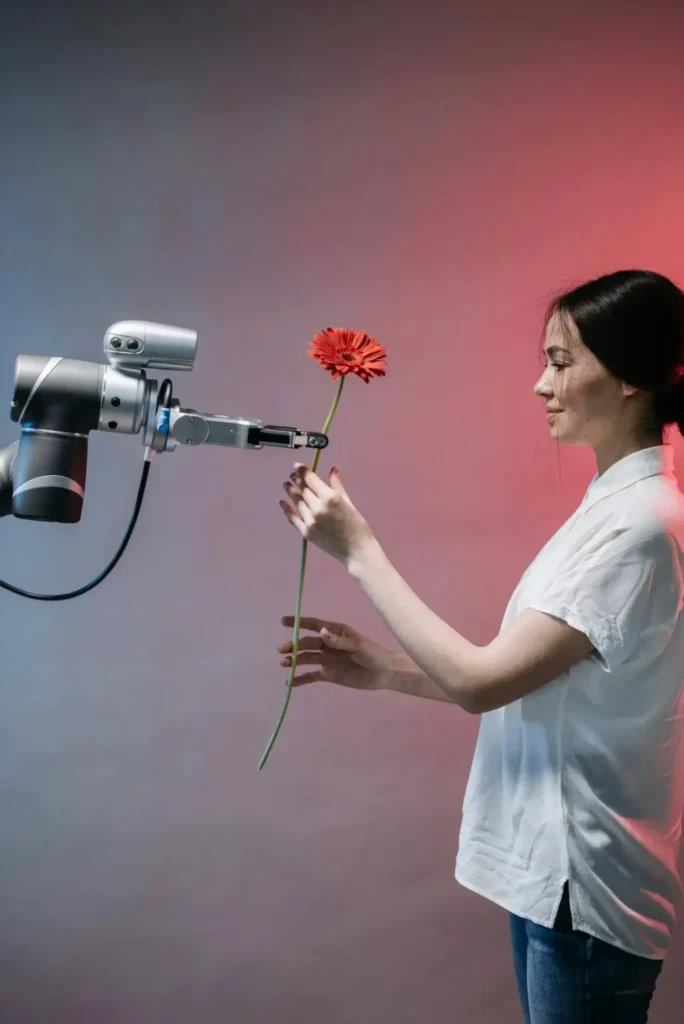
Trust and reliability have been limitations, but this is being solved. Robots with physical systems that imitate human biomechanics are being built, right down to the structure of hand muscles and brains modeled on neural networks. These robots will act as general-purpose companions capable of various tasks. They will be able to operate in a personal, family, or professional capacity and assist us at home and at work.
Why this matters: Labor markets, caregiving, logistics, and home services will look entirely different. It is very important for policymakers to prepare for new ethical and safety standards. Entrepreneurs will find entirely new categories to build for.
Our Children Will Live in a Logic-First, AI-Assisted World
Education will no longer reward memorization since AI will handle that easily. Children will grow up with tools that allow them to explore any craft in depth, much as artisans once dedicated their lives to a single skill. Families will become more self-reliant as agents and robots assist every facet of life.
Why this matters: Policymakers need to redesign curriculums around reasoning, creativity, and ethics. Parents and educators must prioritize intentional learning over rote learning. Businesses will hire for problem solving and critical thinking skills rather than information recall.
Human Connection Will Become More Valuable, Not Less

As the digital world becomes automated, the physical world will grow in value.
- The value of a nurse, coach, trainer, therapist, or doctor will rise because the value lies in their humanity rather than their knowledge.
- Face-to-face events will become more meaningful.
- Just as in music, where live concerts now bring in millions in revenue, many industries will find their monetization tied to human presence rather than digital content.
Why this matters: For businesses, this is a call to automate the predictable and humanize the truly valuable. Policymakers must ensure the caregiving and service economies are strengthened by AI but not replaced by it.
Conclusion: The Road Ahead
AI is not a new tool. It is the beginning of a new operational layer for society. Leaders who prepare by rebuilding systems AI-first, designing for agent-to-agent interactions, and investing in human-centric value will be the ones who define the next decade.
If you’re a business leader, entrepreneur, or policymaker, the question is: How will you adapt to this coming change?
FAQs
As companies like OpenAI evolve into AI operating systems, policymakers face the challenge of regulating these gateways to prevent monopolies and ensure fair access. Clear rules on data privacy measures will be essential for balancing innovation with competition.
Established companies should overhaul their core structures with neural workflows and avoid superficial AI add-ons that fail against true AI-first rivals. This involves retraining teams and partnering with platforms to build AI ecosystems.
Traditional fixed-price websites may give way to agent-to-agent marketplaces, creating opportunities for adaptive revenue streams.
Policymakers must develop standards for robot reliability, privacy in personal spaces, and bias mitigation in neural systems that mimic human actions. These frameworks will safeguard users while enabling safe integration into homes and workplaces.

 View Profile

Recent Posts
-
 May 12, 2026
 -
April 14, 2026
-
 March 10, 2026