Pilots are a tried and true way to test new technology. Yet AI pilot failure in enterprise initiatives is surprisingly common.
That’s because true success lies in overcoming the final gap: moving between “experiment” and execution mindsets. More than proof of concept is needed for success. Yet many enterprises over-focus on their pilots at the ultimate expense of that success. This creates notable difficulties in scaling AI in manufacturing and other intense environments, but impacts many other businesses.
Pilots give AI near-perfect conditions and a simple job. Operational AI deployment doesn’t. AI pilot failure in enterprise risk then increases when businesses rush to incorporate AI somewhere, without asking what problems the AI will actually solve for them first.
But with the right structure and planning, pilots can become scalable solutions that deliver measurable ROI and impact.
AI Pilot Failure in Enterprise Production: Why It Happens

Image Source: Pexels.com
Here’s something to think about: only 5% of current enterprise AI pilots reach production with measurable successes. But most of these AI pilot failures in enterprise specifically happen for predictable reasons:
- They solve test problems, not actual operational needs
- They use perfect data that isn’t there in real environments
- They don’t “play nice” with other business systems
- They lack governance or ownership in the business and so languish
- They aren’t tied to measurable ROI or outcomes
- The tech ultimately doesn’t fit the problem
These are the key issues that stop AI pilots from scaling into business impact. It’s not about potential. It’s about the integration planning behind it.
Pilots are not Built for Operations
Scaling AI in manufacturing, or any deployment, is fundamentally different from a pilot program.
Pilot programs test feasibility. They discover AI proof of concept problems, and refine implementation snags. Many businesses neglect that last part, as well.
Operational use needs different things. Reliability and system performance. Ease of use. Control. Guardrails. A problem that actually needed solving. And it comes with:
- Incomplete or “noisy” data
- Ever-changing conditions
- Needed integration with ERP or operational systems
- Real-time demands and decisions
Most leaders ignore these AI implementation risks, because the pilot “looks good.” But misalignment with day-to-day operations, and so its operational purpose, causes AI pilot failure in enterprise situations.
Moving Beyond Pilots to Operational AI Deployment
Image Source: Pexels.com
Meaningful purpose and the right framework and benchmarks are what separates successful pilots. The focus must be on the problem AI will solve, not the tool itself. AI proof of concept problems rise and AI scaling fails when businesses start by finding the AI solution, and look for a matching problem. It’s a backward approach.
For example, a disproportionate amount of enterprise AI pilots currently focus on sales and marketing efforts. Many companies ignore “back office” potential completely, yet that is where many of AI’s real cost savings are largest.
Instead, businesses should look at the challenges they have which AI can solve, and work from there. In practice, businesses that succeed:
- Design for production from the start
- Solve operational problems with AI
- Remember operational integration between systems
- Prioritize measurable outcomes
- Build real systems, not pretty experiments
This approach both reduces AI implementation risk and increases the likelihood of post-pilot success. It moves the needle from proof of concept to proof of value, where business alignment drives stronger buy-in from all parties. When the focus is on value, meaningful, sustainable business improvements are a given. When the focus is on concept alone, not so much.
In Action:
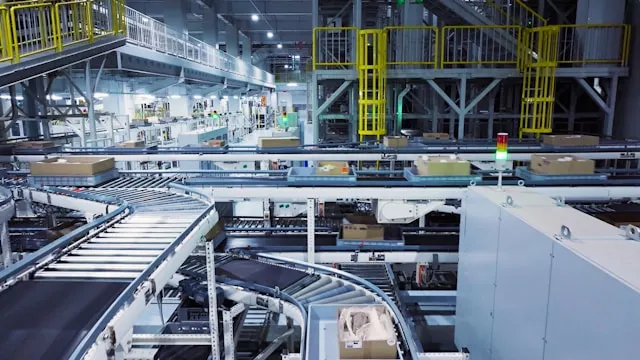
Let’s use scaling AI in manufacturing as an example. Picture a manufacturer with multiple machine outages killing productivity. That’s a real challenge AI can easily solve.
Now, imagine if our manufacturer was chasing AI tools for marketing, ignoring the factory floor. One of these situations is a nice pilot. The other offers a real operational impact. It delivers AI ROI in manufacturing, seen through metrics such as improved throughput rates and fewer outages.
A trial run of AI for predictive maintenance would successfully scale. The marketing effort is likely to languish post-pilot, at least until the factory floor productivity problem is solved.
Turning Pilot Panic into Measurable Enterprise Results

Image Source: Pexels.com
AI pilots are useful. But they are not, alone, enough. Proving AI can work does not guarantee it will deliver in your actual operations.
To avoid the typical AI pilot failures in enterprise rollouts, businesses must focus on the long-term intention, not the short-term results. This means:
- Starting with the business problem, not the tool
- Evaluating the tech for a solid fit
- Ensuring quality structured data
- Remembering that pilots should iterate and refine for implementation, not just prove concept
- Aligning and engaging stakeholders with demonstrable value, not promises
- Ensuring clear controls and governance
It’s time to move beyond pilots and pilot-thinking, and focus on building systems that deliver the results you need in the production environments it will support. And that starts by moving past “proof of concept,” and designing business AI for proof of value instead.
Frequently Asked Questions
Why do many AI pilot failures in enterprises happen?
Statistics suggest that 95% of AI pilots fail to transition to enterprise production. This is because they over-focus on “proof of concept,” not real-world deployment. This leaves them fragmented and lacking a clear business strategy when scaling. With integration and clear ROI goals, AI pilots can see great success.
What are common AI proof of concept problems?
Most AI proof of concept problems are due to over-focus on feasibility, not operational use. This includes a lack of clean, strong data and failure to integrate AI into how you work. Unclear ownership and lack of measurable ROI also causes problems.
How do you scale AI in manufacturing?
To scale AI in manufacturing effectively, integration and clarity are needed. AI should be aligned and integrated with current workflows for success. Clean data from machines, centrally gathered, is also needed. Clear KPIs and metrics ensure AI’s impact can be measured efficiently.
What is operational AI deployment?
Operational AI deployment is when AI pilots move into real production. Or, where AI shifts into live production settings, and works to solve real-world business problems. While many AI pilots are successful, operational deployment is often the snag.
How do you reduce AI implementation risk?
AI implementation risk can be reduced by focusing on solving real business needs, not the technology itself. With high quality data and well-planned integration, risk is also significantly reduced. Clear governance, and focusing on measurable KPIs and metrics, also improves risk.