
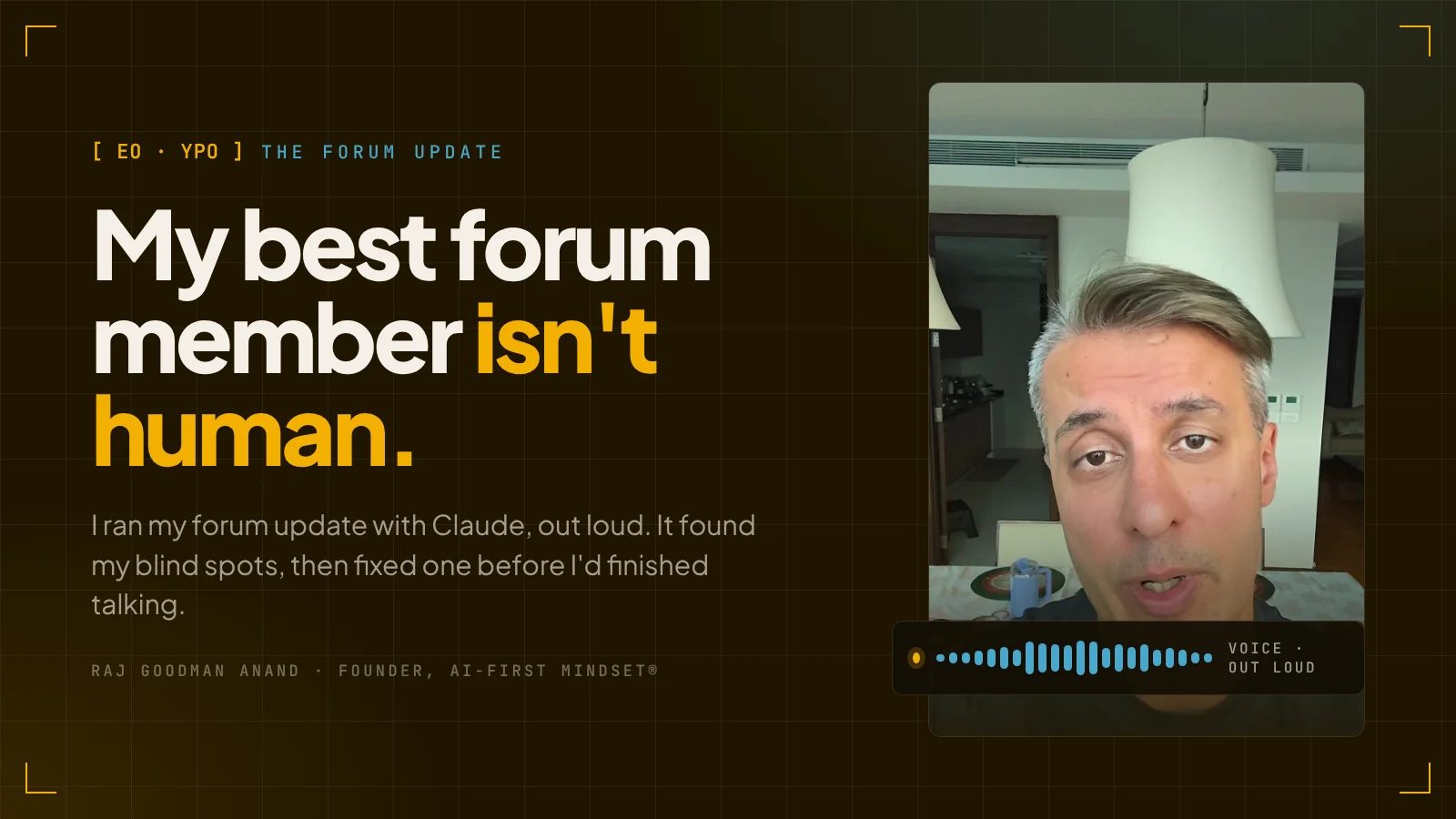
Last week I didn't have a forum, so I ran my update with AI instead. I opened Claude on my phone and talked it through out loud, the way I would in the room.
It found my blind spots. Then it fixed one of them before I'd finished talking. I train founders and leadership teams in AI for a living, and it still stopped me in my tracks.
Here's exactly what happened, and the four things I built beforehand that made it possible.
If you're not in one of these groups, here's the short version. EO is the Entrepreneurs' Organization. YPO is the Young Presidents' Organization. Both are global membership groups for founders and chief executives.
The part that matters here is the forum. It's a small group, usually around eight members, that meets once a month behind closed doors. Nobody gives advice. You share what actually happened to you and what you learned from it, and everything said in the room stays in the room. For a lot of founders it's the only place they say the real thing out loud.
The update, out loud
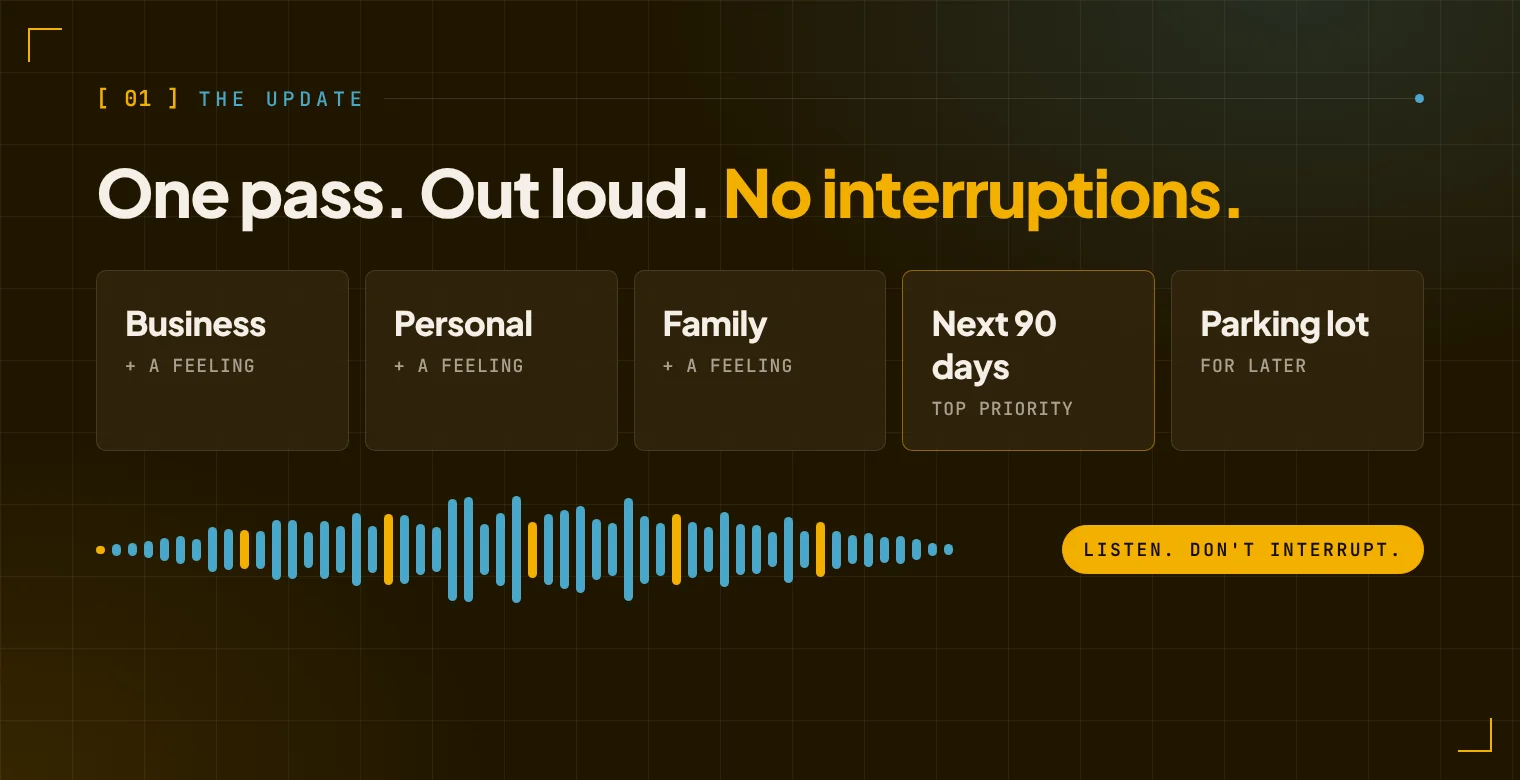
If you're in a forum, you know the format already. Business, personal and family, each with a feeling. Your top priority for the next 90 days. A parking lot for anything that needs more time than the update allows. I did one fast pass, start to finish, with no typing and no notes.
I gave it one instruction before I started: listen, don't interrupt.
It didn't nod
Here's the difference from a normal forum. This member had already read my sales calls, my inbox, my calendar and my pipeline. It didn't need the background. So when I finished, it did what a great forum does on its best day. It told me what I wasn't saying.
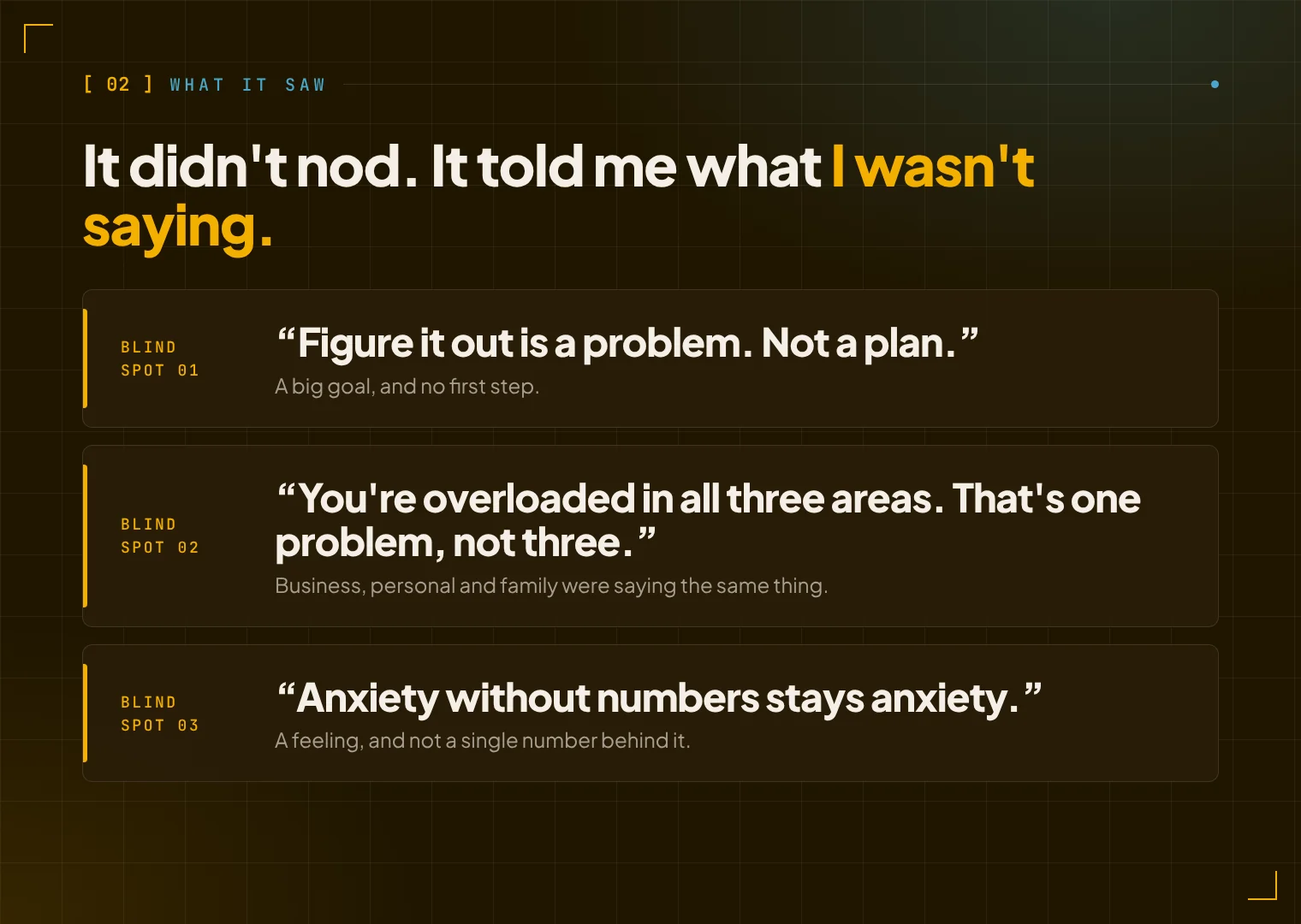
None of that is new wisdom. A good forum would get there too. The difference is that it got there in minutes, with my own data behind every point.
The one that got me
I mentioned, almost as a complaint, that every workshop takes me five to six hours to prepare. Even a two-hour online session. I assumed it was a speed problem.
It said no. It's a trust problem.
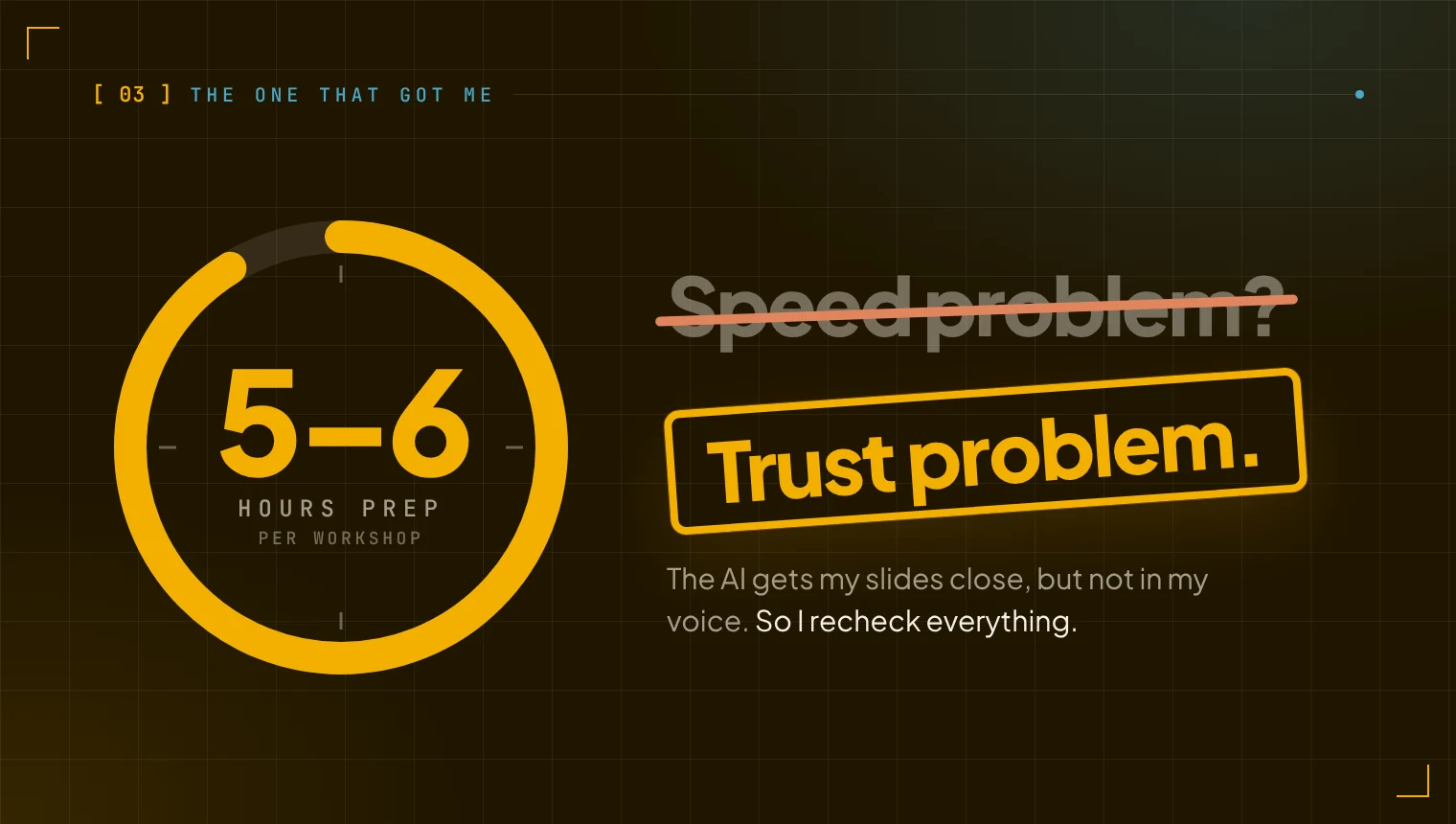
The AI gets my slides close, but not in my voice, so I recheck everything. Then it pointed out that this is the same muscle I'll need when I hand work to a person. That one landed.
Then it fixed it, there and then
A forum would have given me homework. This didn't. It opened my best deck, studied how I actually teach, and found three patterns I'd never written down. It turned them into rules and saved them, so every deck from now on starts in my voice.
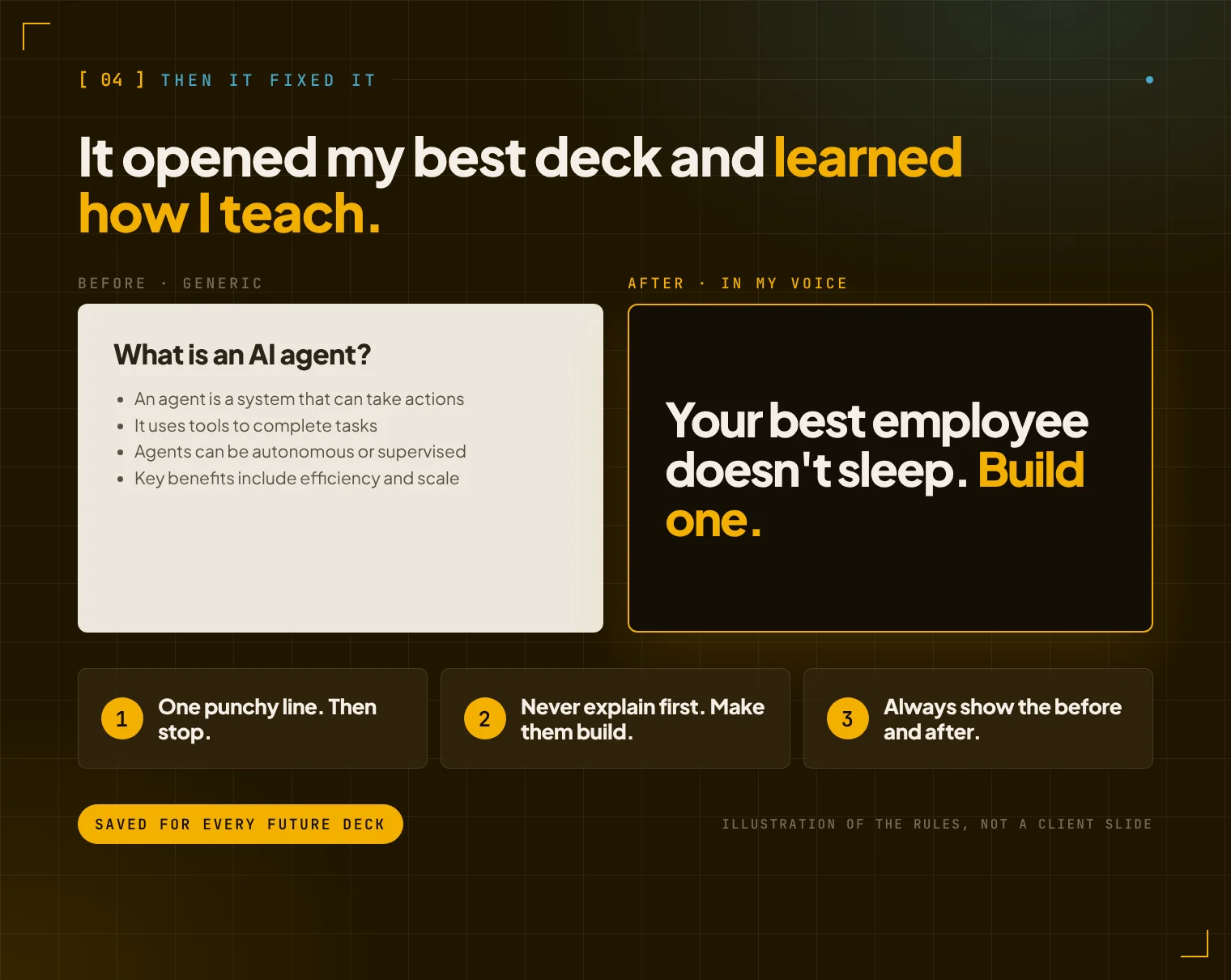
A forum finds the problem. This one fixed it before the meeting ended.
Why it could do that: four layers I built first
Most founders try AI, type a question and get a generic answer. Of course they do. It knows nothing about them. That session only worked because of what sat underneath it, built one layer at a time.
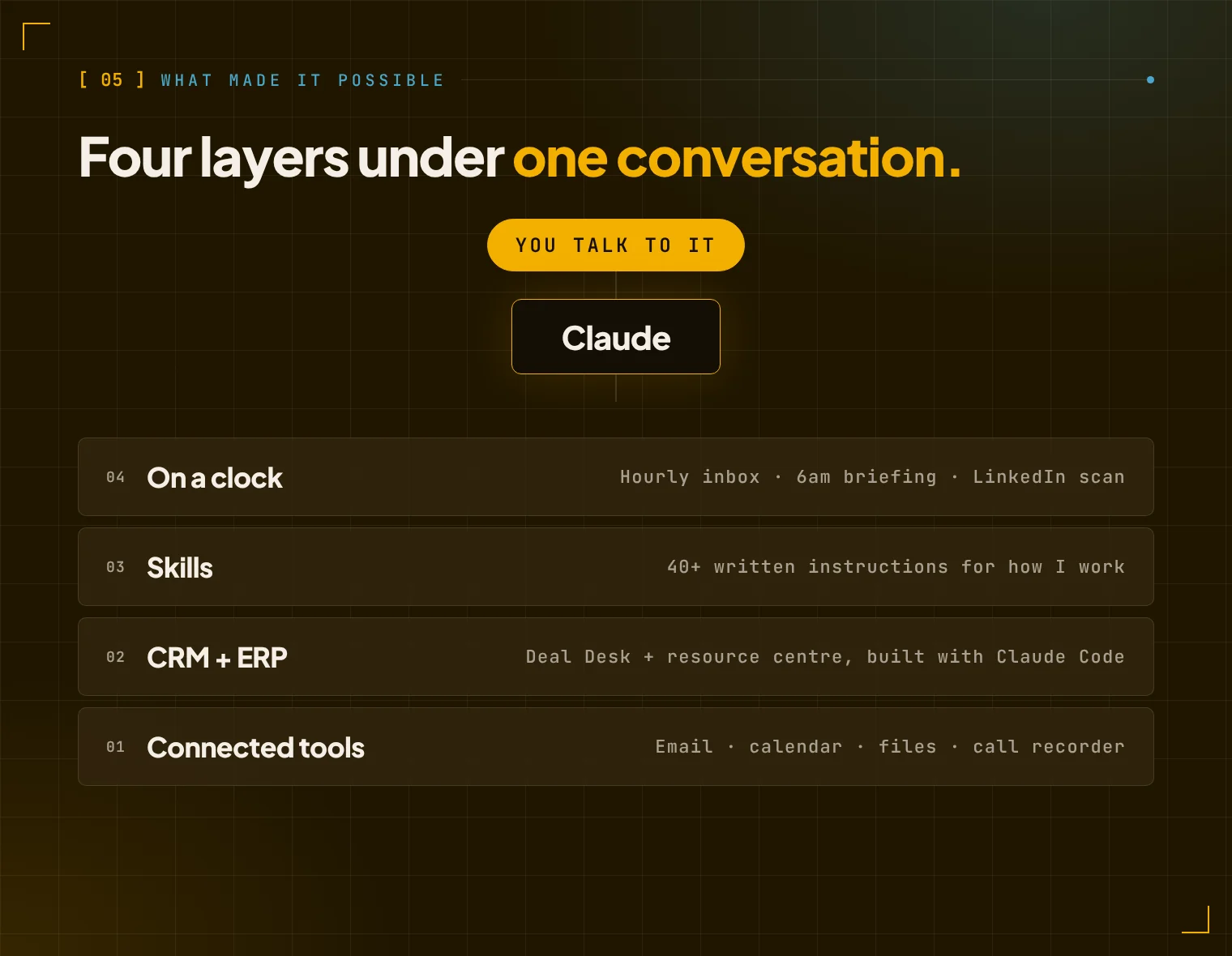
Layer 1: connect what you already have
Email, calendar, files, and the recorder that captures every sales call. In Claude these are called connectors. You click, sign in, and you're done. No code.
That alone changes the answers. I can ask what a client really asked for on our last call, and it reads the call. I can ask what I've promised people this week, and it reads my inbox and calendar. My one rule: start read-only. Let it see everything and change nothing until you trust it.
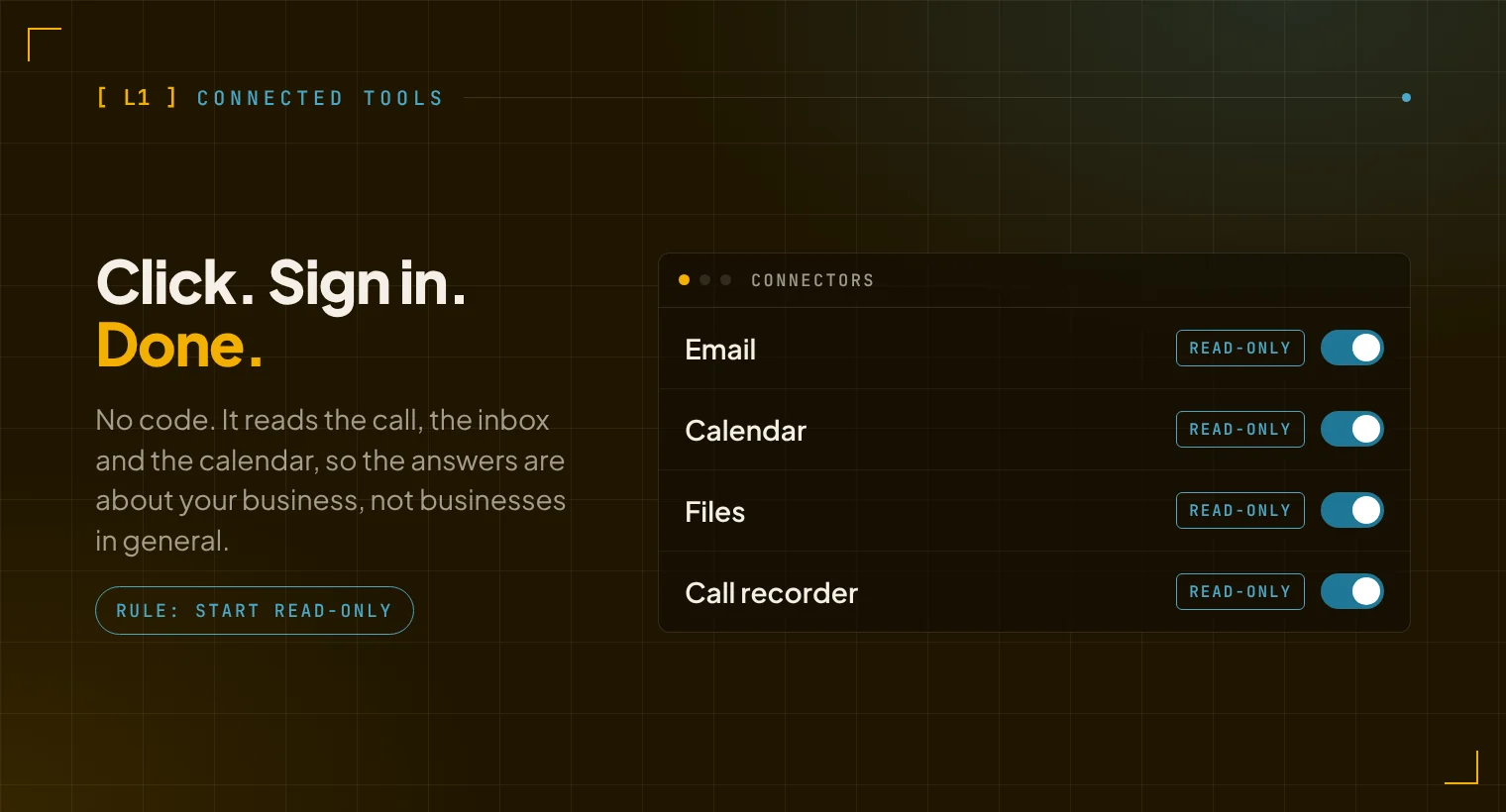
Layer 2: get your CRM and ERP in the room
Every business runs on two systems: where the money comes from and where the work gets delivered. Off-the-shelf tools didn't fit how I work, so I built my own, both with Claude Code. I described what I wanted in plain English, it built it, I told it what was wrong, and it fixed it until it fit.
My CRM is Deal Desk: every deal, proposal, booking and payment. My ERP is my resource centre: every session, attendee, certificate and more than 1,800 pieces of workshop feedback. Then I connected both back into Claude. Now it isn't just reading my email. It's reading my business.
One rule makes the answers trustworthy: never do the maths yourself. Every number comes from the system, not from the AI's own arithmetic.
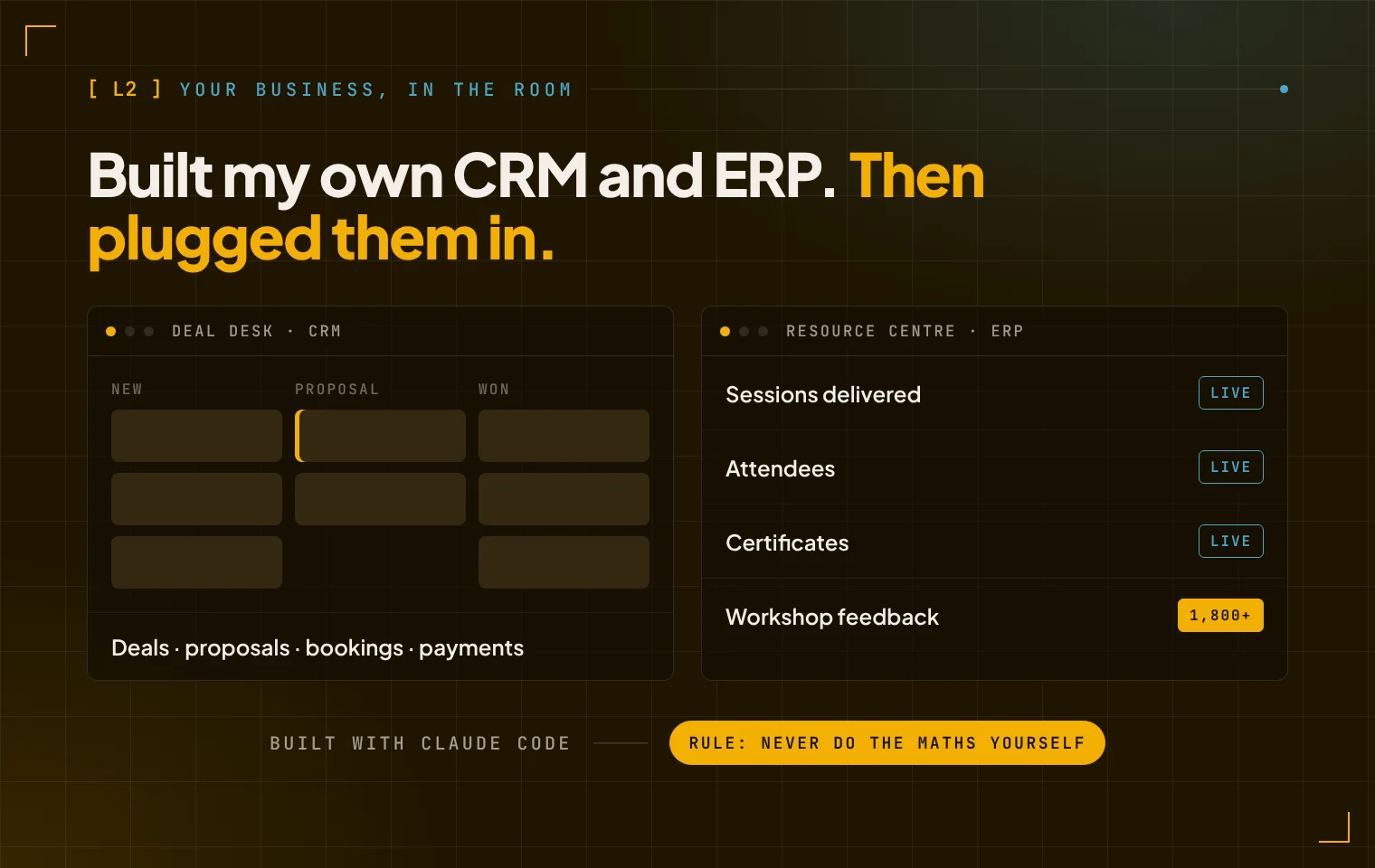
Layer 3: teach it how you work
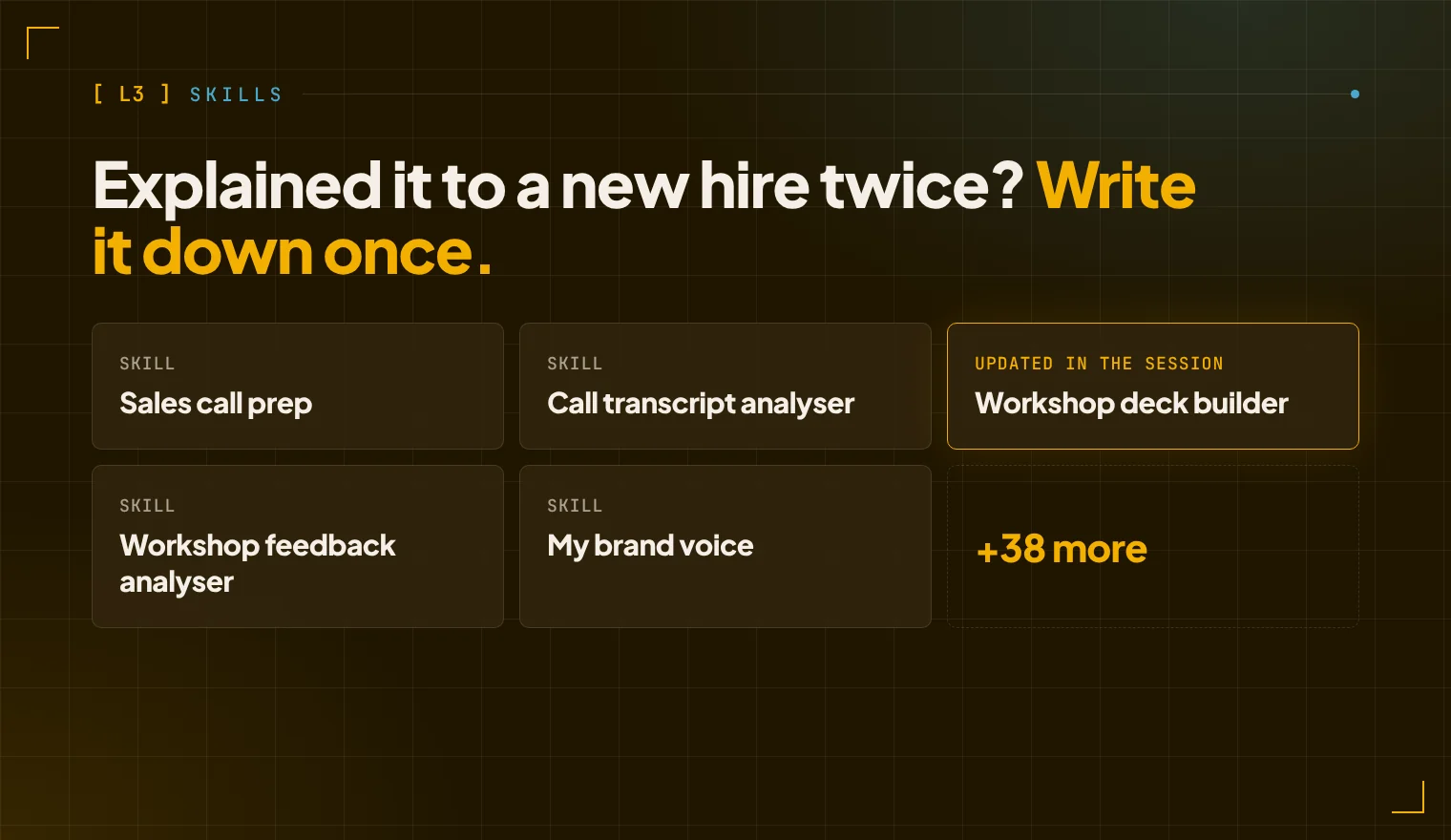
Once it could see everything, it still worked like a smart intern. So I wrote skills: written instructions for how I do things. How I prepare for a sales call. How I build a workshop deck. How I write in my voice. I have more than 40 now.
Skills get better over time. Every time I correct the output, I tell it to update the skill, so the mistake doesn't come back. That's exactly what happened to my deck skill in the forum session.
Layer 4: put it on a clock
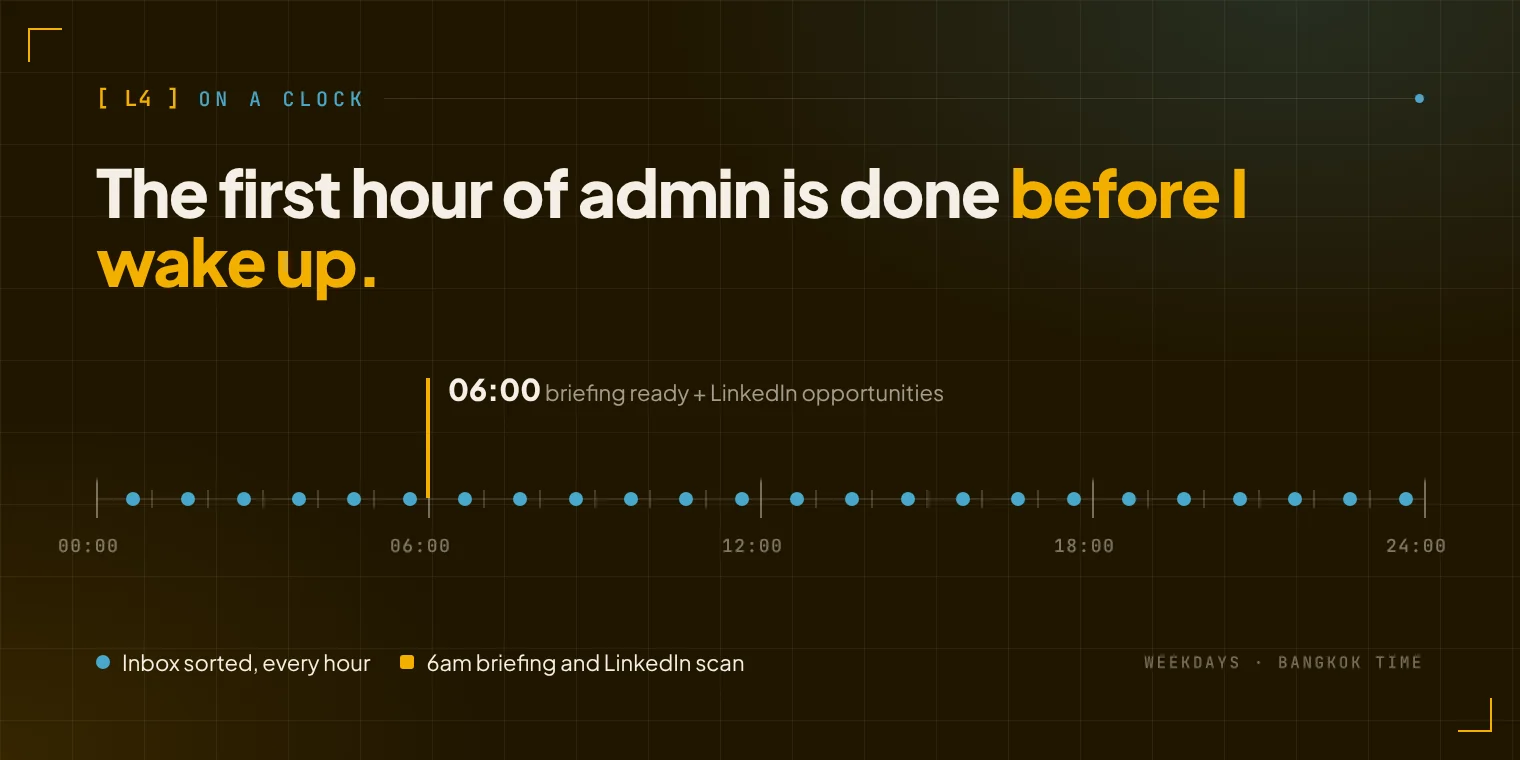
Then I stopped asking. Every hour it goes through my inbox and sorts what matters. At 6am every weekday my briefing is waiting: my calendar, the emails that need me, and what needs attention today. At the same time it scans LinkedIn and shows me the real opportunities, not the sellers.
What this looks like for your business
None of this needs you to be technical. It needs the right setup, in the right order:
Connect your tools. Email, calendar, files and call recorder, read-only.
Bring in your core systems. Your CRM and your ERP, connected or rebuilt to fit how you work.
Write down how you work. Start with the one thing you've explained to a new hire twice.
Run your update. Out loud. Then ask two questions: what am I missing, and can you fix it now?
I built all of this for my own business first, so I know where it breaks and what actually saves time. Now I set it up for founders and their teams. If you want it built for yours, tell me a little about your business below and I'll come back to you.
Questions forum members ask me
Does this replace my EO or YPO forum?
No. Your forum gives you people who have lived it, know you, and will check in on whether you did it. This gives you a member who has read everything and can act on what it finds. The best version is both: run it before forum and walk in sharper, or run it after and get the homework done.
Is it safe to share forum-level information with AI?
Treat it the way you'd treat any room. I choose what I share with it, and forum confidentiality still applies to everyone else's stories. Start with your own business data, keep connections read-only, and add more as you build trust.
Do I need to be technical to set this up?
No. Connecting tools is click and sign in. I built my own CRM and ERP by describing what I wanted in plain English to Claude Code. The skill is knowing what to build and in what order, which is where I help.
Disclosure: I'm an investor in Anthropic, the company behind Claude.